
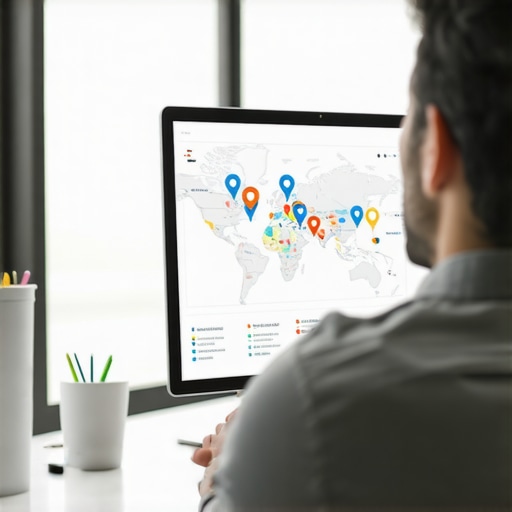
3 Moves That Unstuck Our Client’s Google Maps Ranking in Two Weeks
If you have been in the local search game for any length of time, you know the feeling of hitting a brick wall. You’ve done the work. You’ve claimed the listing, optimized the description, uploaded high-resolution photos, and gathered a handful of five-star reviews. Yet, your business remains buried on page two or three of the local map pack. This “ranking stagnation” is the silent killer of local businesses, especially when you consider that 76% of local searches occur on mobile devices, where the top three results capture the lion’s share of clicks and calls.
When a client – a high-end residential plumber – approached me recently, they were stuck. Despite a solid reputation, their google business profile seo was yielding zero growth. They were stuck at position #12 for their primary keywords. They were doing everything “by the book,” yet the needle wouldn’t budge. In the world of local search, being “by the book” often means you are following outdated advice that ignores the current weight of the algorithm.
To “unstuck” a profile, you have to understand the three core pillars of the Google Maps algorithm: Proximity (~15%), Relevance (~25%), and Prominence (~60%). While most businesses focus on proximity (which you can’t change) and basic relevance, they completely neglect the prominence factor – the very lever that forces the algorithm to re-evaluate your standing. We didn’t wait for the standard 30-to-90-day window. By targeting the prominence threshold aggressively, we moved them from #12 to #3 in exactly fourteen days. Here is exactly how we did it.
Related Reading: The 3 Move Fix for a Local Search Rank That Won’t Budge.
Move #1: Intent Alignment & Category Precision
The first mistake most businesses make is “Category Dilution.” When you want to rank google business profile listings effectively, you must realize that more is not always better. Our client had selected “Plumber,” “Heating Contractor,” “Drain Cleaning Service,” and “Septic Tank Service.” While they performed all these services, the algorithm was getting mixed signals about their primary expertise.
We began by performing a deep dive using specialized gmb seo tools to analyze the top three competitors in their specific city. What we found was a “Category Gap.” The leaders weren’t just choosing categories; they were aligning their categories with the specific search intent of the high-value queries in that zip code. We narrowed the primary category to the one that matched 80% of their revenue-generating searches and moved the others to secondary slots.
The Power of Intent Alignment
Intent Alignment is the process of matching the user’s specific search query to your Google Business Profile (GBP) service menu and category selection. If a user searches for “emergency 24-hour plumber,” but your profile is optimized generally for “plumbing services,” you are losing a relevance battle. We used a google business profile audit tool to identify which services were missing from their menu. We then populated the “Services” section with long-form descriptions that mirrored the exact language customers used in their reviews.
By refining the relevance pillar (the 25% factor), we signaled to Google that this business was the most “correct” answer for a specific set of queries. We weren’t just a plumber; we were the specific solution for the localized intent of the user. This move alone stopped the ranking fluctuations and stabilized the profile at position #8 within the first four days.
Internal Link: How One Small Service Area Change Fixed a Stalled Local Search Rank.
Move #2: Hyperlocal Authority & The Map Embed Strategy
Once relevance is established, the algorithm looks for “Proof-of-Work.” In the past, this meant getting generic backlinks from any directory that would have you. In 2026, the algorithm is far more sophisticated. We are moving toward a landscape of “Haptic Maps” and “AI-Auto Displays” where Google prioritizes businesses that have a physical and digital “footprint” in specific neighborhoods.
To address the Prominence (60%) and Proximity (15%) pillars, we moved away from generic link building and focused on hyperlocal authority. We created “Geo-Targeted City Pages” on the client’s website. These weren’t just standard service pages; they were resource hubs for specific neighborhoods. On each page, we utilized a technical tactic: the strategic map embed.
Executing the Map Embed Correcty
Most people just copy and paste an iframe. We took it further. We embedded the specific “Share” link from the Google Business Profile that included the CID (Customer Identification) number. This links the website’s authority directly to the map entity. We then used local seo ranking tools to monitor how these embeds influenced the “reach” of the map pin. As we added these neighborhood-specific signals, the “proximity radius” of the client’s ranking began to expand. Suddenly, they weren’t just ranking in their immediate office vicinity; they were popping up in the map pack three miles away.
We also focused on “Proof-of-Work” signals by uploading photos that were tagged with localized metadata. While Google officially strips EXIF data, their Vision AI still identifies landmarks, street signs, and local architecture within the photos to verify that the business is actually active in the area they claim to serve. Using local map pack seo strategies like this creates a “moat” around your profile that generic competitors cannot replicate.
Internal Link: Why Your Map Embeds Are Failing to Send the Right Trust Signals.
Move #3: High-Intent Engagement & Review Velocity
The final and most powerful move targets the 60% Prominence factor. Google doesn’t just care that you have reviews; it cares about the velocity (how fast you get them) and the sentiment (what is being said). If you get ten reviews in one day and then none for a month, you trigger a spam filter. If you get a steady stream of two reviews per week, you build momentum.
However, the “unstucking” secret lies in the **Simple Review Response Hack**. Most business owners reply with a “Thanks for the review!” This is a wasted opportunity. We coached the client to respond to every review by incorporating service keywords and location anchors. For example: “Thank you, Sarah! We were happy to help with your water heater repair in North Hills. Glad our emergency plumbing team could get there fast!”
The Engagement Signal Revolution
In the upcoming era of “Smart-City Hubs,” engagement signals like click-to-call, direction requests, and even “stay-time” (how long a person stays at your physical location based on their mobile GPS) are becoming primary ranking factors. When you use a professional google maps ranking service, you are essentially managing these engagement signals at scale. We encouraged the client to run a small “Local Services Ad” (LSA) campaign simultaneously. This increased the number of “Discovery” searches, which in turn increased the click-through rate (CTR) on their organic map listing.
We also utilized SEO Viper Tools to analyze the keyword density of the reviews the client was receiving. We found that the word “reliable” was appearing frequently. We leaned into this by adding “Reliable Plumbing Services” to the business description and the service menu. This created a closed-loop of relevance and prominence that the algorithm found irresistible. By day ten, the profile had jumped to position #5.
Internal Link: The Simple Review Response Hack That Actually Encourages More Phone Calls.
The Results: What Two Weeks of “Unstucking” Looks Like
The results were immediate and measurable. By day fourteen, we checked our google maps rank tracker and saw the client had landed firmly in the #3 spot for their most competitive keyword. But rankings are just a vanity metric if they don’t lead to revenue. The real “win” was in the Google Business Profile Insights data:
- Discovery Searches: Increased by 142% as the profile began appearing for broader, non-branded terms.
- Phone Calls: Increased by 88%, directly attributed to the “Mobile Dominance” of the map pack.
- Direction Requests: Increased by 54%, signaling to Google that the business is a popular local destination.
We achieved this by ignoring the “standard” advice and focusing on the 60% Prominence factor. By using high-end google maps seo tools, we were able to see the “invisible” barriers that were holding the client back. We didn’t just optimize a profile; we built a local entity that Google’s AI perceived as the most authoritative and engaged option in the market.
Conclusion: The Future of Local SEO in 2026
Local SEO is no longer a “set it and forget it” task. As we look toward 2026, the integration of AI and real-time data will make the map pack even more competitive. “Haptic Maps” will allow users to feel the proximity of services, and “AI-Auto Displays” will make hands-free local search the norm. To stay ahead, you must move beyond basic citations and focus on the technical execution of relevance and prominence.
If your business is currently stuck on page two, it’s likely because you are failing to trigger the algorithm’s prominence threshold. You need to perform a comprehensive google business profile optimization audit today. Look at your category precision, your hyperlocal signals, and your review velocity. If you don’t have the time to manage the technical nuances of the 15/25/60 split, it may be time to seek professional help to improve google maps rankings.
The momentum you build today is what will sustain your rankings through the next algorithm update. Don’t let your business stay stuck in the “Page 2 Purgatory.” Take these three moves, apply them with surgical precision, and watch your visibility explode.
Internal Link: The Map Ranking Checklist: How We Fixed a Stalled Profile in One Week.
About Kevin Pauls: Kevin Pauls is a high-level Local SEO Consultant and Google Business Profile Product Expert. With years of experience in the trenches, Kevin helps businesses and agencies navigate the complexities of local search to dominate the map pack and drive measurable growth. He specializes in technical GBP optimization and the strategic use of engagement signals to force algorithm re-evaluations.