
The hidden failure of general software in a local map pack world
I smell peppermint and the dry dust of old paper today as I sit in this office. I have been in the trenches of the hyper-local layer for twenty years. I remember when a business listing was just a line in a book; now it is a Proximity Beacon in a complex spatial database. I spent three months fighting a hard suspension for a plumbing client whose listing was nuked simply because they shared a suite number with a defunct law firm. Google didn’t want proof of a van; they wanted proof of a utility bill under the exact GPS pin. They wanted a business license that matched the Point of Sale data exactly. This is the grit of the local algorithm that national tools never see. Most agencies sell you a dream based on national averages while your local shop is being strangled by a centroid shift or a service area polygon error. You are likely watching your revenue dip because you trust a software dashboard that was built to track global rankings rather than the physical reality of your street corner.
The myth of the national ranking average
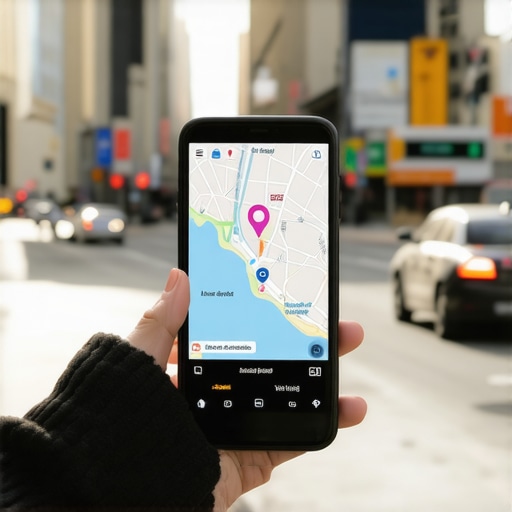
Generic SEO tools fail because they treat Google Business Profile rankings as a static, global metric rather than a distance-weighted signal. Your Map Pack visibility changes every fifty feet as a user moves through a city. To understand why your data is wrong, you must recognize that local search results are governed by GPS coordinate salience and hyper-local proximity. You can find out why most GMB rank trackers give you the wrong data by examining how they aggregate information. These tools often ping a server from a single data center miles away from your storefront. This creates a false positive. You think you are ranking first in the city; in reality, you are only ranking first in the server room. The truth is that local relevance is secondary to the physical location of the user’s mobile device. If a tool is not simulating a mobile GPS signal from a specific neighborhood, the data is worthless for a local merchant trying to capture foot traffic.
“Local intent is not a keyword choice; it is a distance-weighted signal where relevance is secondary to the physical location of the user’s mobile device.” – Map Search Fundamental
The ghost in the GPS coordinates
Map Pack rankings are determined by the mathematical weight of your business centroid relative to the user’s geographic search intent. If your listing is suppressed, it is often due to proximity filters that remove overlapping businesses in the same category. When multiple businesses in the same niche share a building, Google filters out the weaker signal to avoid redundancy. This is why why sharing an office suite might be killing your map rank even if your SEO is technically perfect. The algorithm sees two plumbing companies at the same latitude and longitude and assumes one is a spam listing. You need to prove geographic authenticity. You need to show that your business exists in three dimensions, not just as a JSON-LD attribute on a website. I have seen listings vanish because a neighbor used a similar NAP profile. You must be the loudest beacon in the cluster to survive the filter. This requires a manual audit of your local citation footprint to ensure there are no duplicate listings or ghost profiles haunting your address.
Why your physical address is a liability
Your business address can become a ranking obstacle if it sits on the edge of a high-density commercial hub or inside a virtual office. Google Business Profile triggers verification loops when it detects untrustworthy location signals such as a UPS box or a shared coworking space without a permanent sign. Businesses often struggle with the the geo-location fix for businesses stuck on the edge of town because they are competing against city-center centroids. If your competitors are closer to the geographic heart of the search query, you will lose the 3-pack position regardless of your review count. This is a cold, mathematical reality. The algorithm prioritizes the least distance path for the user. To fight this, you must expand your relevance radius through local justification triggers. This means your website must mention specific landmarks, neighborhood names, and local service area polygons that prove your geographic authority beyond just your front door. It is about becoming a hyper-local entity that the Map Pack cannot ignore.
The three mile radius that determines your revenue
Service based businesses live and die by a three mile radius where Google Maps chooses to display their business profile to active searchers. Within this circle, your NAP consistency and local review sentiment are the primary drivers of click-through rates and phone calls. Beyond this radius, the proximity filter kicks in, favoring businesses physically closer to the user’s mobile ping. You can learn how to track map positions without relying on inaccurate grid tools to see where your ranking strength actually ends. If you see a sudden drop in calls, it is likely that a competitor has keyword stuffed their name or improved their customer check-in density. These behavioral signals tell Google that people are actually visiting the location. A business with one hundred reviews but zero location-based user signals will eventually lose to a business with twenty reviews and a high volume of GPS-verified visits. This is the behavioral zooming that national SEO tools simply cannot simulate.
“The stability of a local centroid is determined by the intersection of user behavior patterns and the verified geographical authenticity of the entity.” – Location Intelligence Quarterly
Local Authority Reading List
- Cracking the code for higher map positions
- The checklist for GMB reinstatement
- Tools to diagnose low map visibility
- Documentation needed for hard suspensions
- Identifying toxic local link patterns
Forensic audit of the local map pack
GMB audit tools must analyze the forensic traces of your competitors, including their hidden categories and image metadata, to provide a real ranking strategy. Most generic SEO tools only look at primary categories and backlinks. They miss the secondary category clusters that allow a locksmith to rank for both car keys and safe repair. If you are struggling with volatile map rankings, you may need local seo services to stabilize volatile map rankings after expansion to ensure your new branch doesn’t cannibalize your main office. Expansion creates entity confusion. Google sees two locations and isn’t sure which one to trust for a broad city search. You must use technical seo services to fix indexing and crawling issues that prevent your location pages from being associated with your Map Pack pin. Without this linkage, your business profile is a floating island without a digital foundation. I have seen many businesses fail because their website footer NAP didn’t match their GMB dashboard. These NAP inconsistencies are the primary cause of ranking decay over time.
The math behind local review sentiment
Review sentiment analysis is now a core component of how Google determines the trustworthiness of a local business entity. The algorithm uses Natural Language Processing to identify service-specific keywords within your customer feedback. If your reviews mention fast response times and fair pricing, Google will use those as justifications in the Map Pack results. You can use a toolkit for turning map impressions into calls to capitalize on this. It is not just about the star rating; it is about the frequency and recency of the entity-relevant terms used by your customers. If you are hit by a negative review attack, you need local seo services to fix banned gmb listing issues or recovering from spam protocols. Forensic investigators like me look for VPN patterns and empty user profiles to report review fraud. Google is increasingly sensitive to review velocity that doesn’t match the physical traffic of the location. If you have five hundred reviews but no one ever searches for your branded name, the algorithm will flag you for manual review. Authenticity is the only currency that lasts in the Map Pack ecosystem.