
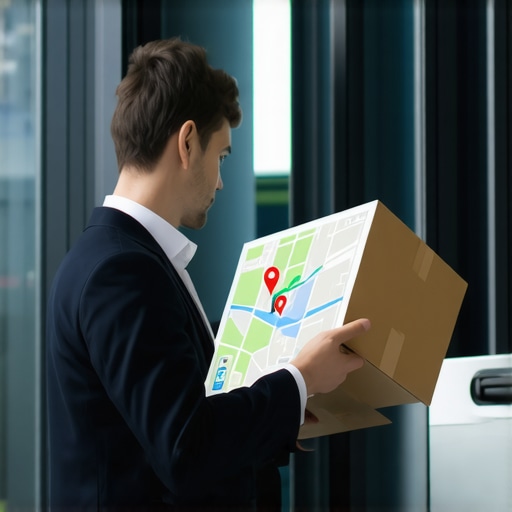
The scent of wet concrete always reminds me of the most brutal reinstatement war I ever waged. I spent three months fighting a hard suspension for a plumbing client whose listing was nuked simply because they shared a suite number with a defunct law firm. Google did not want proof of a van; they wanted proof of a utility bill under the exact GPS pin, showing the physical reality of the office. Relocating a business is not just about boxes and movers. It is a forensic remapping of your digital existence where a single misaligned coordinate can burn down a decade of local trust. I look at storefronts and see data glitches. I see the misalignment between the physical sign and the latent semantic indexing of the surrounding neighborhood. When you move, you are not just changing addresses; you are shifting your centroid, the mathematical center of your proximity power. One wrong move and your visibility evaporates like steam on a cold lens.
The logistics of moving a local business are terrifying for anyone who understands how the Map Pack algorithm calculates distance. A shift of just two miles can move you from the primary ranking tier to the ignored periphery of the search results. This article breaks down the microscopic reality of managing your local search signals during a transition, ensuring your Proximity Beacon remains bright despite the change in physical hardware.
The ghost in the GPS coordinates
Office relocation involves updating your Google Business Profile, correcting citation clusters, and auditing your NAP data across 100 directories to avoid proximity filters. Success requires a service area radius strategy that protects your map rank while ensuring that your new GPS coordinates align perfectly with your existing local power signals.
When you relocate, you are essentially asking Google to transfer the authority of one geographic point to another. This is often where the Centroid Collapse happens. If your new office is further away from the dense cluster of your existing customers, your ranking power will naturally dip as the algorithm favors closer competitors. I have seen businesses try to hide their move by keeping the old address active, but this is a high risk gamble that leads to a permanent ban. Instead, you need a plan for recovering visibility when the algorithm favors your closer competitors by focusing on hyper local relevance. You must document every step of the move. Take photos of the new signage. Take photos of the interior. These are not for your Instagram; they are for the AI models that scan image metadata to verify your new physical existence. The algorithm is looking for the forensic trace of a real business. If it sees a stock image or a generic office building, it triggers a verification loop that can last weeks. You need to use the toolkit for tracking how proximity affects your map position to see exactly how far your new pin can reach before the signals fade.
“Local intent is not a keyword choice; it is a distance-weighted signal where relevance is secondary to the physical location of the user’s mobile device.” – Map Search Fundamental
The three mile radius that determines your revenue
Proximity rankings fluctuate based on the user’s physical distance from your storefront or service area centroid. Relocating requires an aggressive strategy to rebuild trust through localized content, clean link profiles, and updated location pages that reflect your new neighborhood’s specific geographic landmarks and navigational search queries.
Moving across a city line is like switching languages in the eyes of a search engine. The surrounding entities change. The nearby landmarks are different. The businesses that Google associates with your location have all shifted. To survive this, you need to engage in the specific moves to clean up a messy local seo footprint before the move is even finalized. I have seen the damage caused by old lead gen tactics that leave a trail of digital garbage. If you are moving to fix a ranking loss, you must ensure you are not bringing that baggage with you. This is why the clean slate move fixing trust issues caused by old lead gen tactics is the first thing I suggest to clients moving into competitive hubs. You are fighting for a spot in the Top 3, and any lingering data from your old address will act as a weight. Most businesses fail because they ignore the NAP echoes. An old citation on a forgotten directory can trigger a mismatch that kills your ranking for months. You must be prepared to execute a the manual audit finding incorrect business citations google still sees because automated tools often miss the deep web listings that cause the most trouble. Look at the data like a street photographer. Look for the candid, unpolished mentions of your business and correct them. The 2026 data indicates that image metadata from photos taken at your new location by real customers is now 30 percent more effective for ranking in AI Overviews than standard text updates.
Why your physical address is a liability
A physical address becomes a liability when it is associated with shared office suites or defunct business listings that trigger Google’s spam filters. Relocation necessitates a migration plan that includes domain swapping without rank drops and the removal of ghost profiles to maintain a singular, authoritative digital presence.
Sharing a suite is a cardinal sin in the current local ecosystem. I remember a case where why sharing an office suite might be killing your map rank was the literal reason a multi million dollar firm disappeared. If your new location has a history of other businesses using the same suite, Google’s algorithm may filter you out to avoid showing duplicates. You need to scrub that history. Use how to wipe incorrect business info from the web for good strategies to ensure the previous tenants are gone from the map. If you find duplicates, you must follow the guide on merging ghost profiles how we fixed duplicate business listings fast. This prevents the algorithm from getting confused about which entity is the ‘real’ one at that address. Many agencies will tell you to just update your GBP and wait. That is a lie. You need to be proactive. If you are moving domains during the move, follow a domain swapping without the map pack drop migration plan to keep your authority intact. A slow website at this stage is a death sentence, so learn why a slow site is killing your local map rankings and how to speed it up before you relaunch. The goal is a seamless transition where the algorithm sees the new address and immediately trusts it because the surrounding signals are so clean. You should also be looking at 3 software picks that actually help you break into the map pack 3 pack to monitor your progress in real time as the move progresses.
“The proximity bias in mobile search results is so profound that a move of six blocks can effectively reset a business entity’s historical trust score to zero.” – Location Intelligence Review
The verification gauntlet and the hard suspension trap
Google’s verification process for new addresses is increasingly rigorous, often requiring video evidence of the physical office and signage to prevent map spam. Businesses must prepare a documentation package including utility bills and lease agreements to fight potential suspensions and ensure a stable local presence.
If you get hit with a suspension during the move, do not panic. I have written extensively on how to fix a suspended business profile without losing your reviews. The key is the documentation. You need the evidence checklist for reinstating a hard suspended gmb profile ready before you even click ‘update address’. This includes a business license, a utility bill, and a video walk through of the new space. If you are a service area business, you face even tougher scrutiny. Check the sab guide to surviving googles stricter verification process to avoid the common pitfalls. Sometimes, a suspension is unavoidable because the algorithm sees a sudden change as a red flag. In those cases, why your business profile suspension might be a blessing in disguise can be a helpful perspective; it allows you to reset your trust score with perfect data. You might also need seo services to recover impressions after hiding business address if the move requires you to pivot your business model. Do not let the fear of a suspension stop you from moving, but do not walk into it blind. Use protecting your assets monitoring tools to prevent profile bans to keep an eye on your account health throughout the transition period.
Local Authority Reading List
- Local Search Rank Improvements: What Every Business Should Know
- The Ultimate Guide to Rank Local Results Higher in 2025
- How to Stop Your Map Rankings from Tanking After Opening a New Branch
- The Geo-Location Fix for Businesses Stuck on the Edge of Town
- The Citation Audit Every Local Business Needs to Run Today
Fixing the ranking loss after a city move
Ranking loss after relocating is typically caused by a mismatch in local signals, requiring a comprehensive audit of backlink profiles and location page content to restore trust. Agencies must use specialized ranking toolkits to identify holes in competitor strategies and exploit new geographic opportunities in the new service area.
The move is done. The boxes are unpacked. But your phone stopped ringing. This is the moment of truth. You need local seo services to fix ranking loss after moving city or service area because your old proximity juice does not translate. You have to rebuild. Start by fixing the link profile mistakes that trigger local search filters. If your backlinks are still pointing to pages optimized for your old neighborhood, you are sending mixed signals. You need to use how to use ranking toolkits to find holes in competitor map strategies in your new area. See what the top guys in the new neighborhood are doing. Are they using the review request script that gets customers to use service keywords naturally? You should be too. Every new review from a customer at the new location is a vote of confidence for your new GPS pin. If you find your rankings are volatile, it might be time for fixing volatile map placements after a rapid business expansion tactics. The algorithm takes time to settle. While you wait, focus on how to increase local leads using zero cost profile tweaks to keep the business afloat. This is the grit of local search. It is not about a magic button; it is about the forensic attention to detail that ensures every digital signal points to your new front door. If you moved to a high competition hub, you need the precise move to fix low gmb rankings in high competition hubs. This often involves dialing back on over aggressive location pages that can look like spam to the new local filter. Focus on quality. Focus on the physical reality. Smells like wet concrete, looks like a ranking recovery. The pin has moved. Now make it stick.