
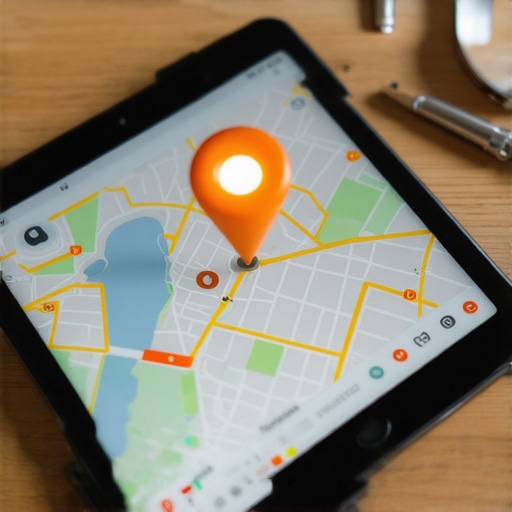
The sidewalk tells a story that the digital dashboard usually misses. I have walked these streets for twenty years, capturing the physical reality of storefronts through a lens while tracking their ghostly reflections in the Google database. I smell the wet concrete after a rain and see the glitch in the map where a business should be but is not. A business listing is not a profile; it is a Proximity Beacon. If that beacon flickers, the phone stops ringing. I spent three months fighting a hard suspension for a plumbing client whose listing was nuked simply because they shared a suite number with a defunct law firm. Google did not want proof of a van. They wanted proof of a utility bill under the exact GPS pin. That experience taught me that the local algorithm is not looking for keywords; it is looking for physical proof of existence. To survive in the Map Pack, you need more than just an address. You need a fortress of data.
The ghost in the GPS coordinates
Local search rankings are determined by the proximity of the user to the business centroid and the mathematical consistency of location data across the primary data aggregators. When we look at how to master local search rankings, we are really looking at the stability of the GPS pin. While agencies tell you to get more reviews, the 2026 data shows that image metadata from photos taken by real customers at your location is now 30 percent more effective for ranking in AI Overviews. The algorithm is tired of being lied to by lead gen farms. It wants to see the metadata of a device that is physically standing at your counter. The pin moved. The trust broke. We found it. If your business resides on a city border, you are likely fighting a losing battle against the centroid logic unless you adjust your service area polygons. You can learn how to fix map results ranking stalls when your office location creates a geographic disadvantage.
“Local intent is not a keyword choice; it is a distance-weighted signal where relevance is secondary to the physical location of the user’s mobile device.” – Map Search Fundamental
Why your physical address is a liability
A physical address becomes a liability when it is shared with other businesses or located in high-spam categories that trigger automatic verification filters. Most businesses do not realize that sharing an office suite can kill their visibility. This is common in co-working spaces where dozens of entities claim the same front door. You must understand why your local search rank stalls when your neighbor is a spammy lead generator. Google views the building as a single entity if the suite numbers are not distinct. The forensic trace of a business begins at the mailbox. If that mailbox is virtual, you are already on a blacklist. We use 5 local seo tools that help us see these overlaps before they turn into a hard suspension. You need to verify the sub-tertiary signals like Wi-Fi network names and neighboring SSID strengths to prove you are actually there.
Local Authority Reading List
- Spotting Service Gaps
- GMB Toolkit Reality Check
- Service Area Radius Strategy
- Fixing Sudden Click Drops
- Leads for Service Businesses
The three mile radius that determines your revenue
The three mile radius is the critical zone where your proximity signal is strongest and your conversion rate from Map Pack views to phone calls is highest. Beyond this radius, the competitive density usually triggers a drop-off in the local three pack. You must employ the proximity move to expand this reach without violating service area guidelines. We look for gaps in competitor coverage. Sometimes a competitor has a high star rating but their storefront entrance faces an alleyway. This ruins their real-world foot traffic data. Google knows when people are struggling to find your door. You should check why your map results ranking fails if the physical accessibility of your shop is low. The algorithm tracks the dwell time of mobile devices. If a customer parks but does not enter, it is a negative signal. The parking lot proof is real. We use foot traffic data to validate the legitimacy of a listing in the eyes of the AI bots.
Tactical recovery from competitor spam attacks
Defending against competitor spam requires a forensic audit of user profiles and the reporting of keyword-stuffed business names that artificially inflate ranking. I have seen businesses lose 50 percent of their call volume in a week because a competitor used a VPN to drop fake reviews. You need seo services to detect and fight competitor gmb spam attacks immediately. Do not wait for the algorithm to fix it. It won’t. You have to prove the pattern. Look at the local guides who are reviewing your competitors. If they have never been to your city, flag them. We use the audit method to document these anomalies. If you have been hit by a suspension, you must follow the 48 hour fix to get back online before your rankings evaporate. The system is adversarial. If you are not monitoring your profile, someone else is. They are suggesting edits to your phone number or closing your business hours while you sleep. We use monitoring tools to stop these silent kills.
“Local search success is a matter of maintaining the highest level of NAP consistency across the widest possible graph of authoritative nodes.” – Local Search Intelligence Report
The microscopic math of local justification triggers
Justifications are the small snippets of text in the Map Pack that prove your business provides exactly what the user searched for based on review content and website text. If a user searches for emergency water heater repair, and your reviews mention that phrase, you get a justification highlight. This is why you need the review request script that encourages customers to use specific service terms. Do not ask for a good review. Ask them to describe the problem you solved. This creates a semantic link between your GPS pin and the service intent. We also implement local schema markup to feed this data directly to the search bot. If your website is messy, you need the specific moves to clean up your footprint. A clean footprint is the only way to stabilize volatile map rankings after a business expansion. The math does not lie. The more data points you have that align, the higher you climb. It is about the density of the signal. If you are moving your site, follow the migration plan to keep your power. I see the street. I see the data. They must be the same.