
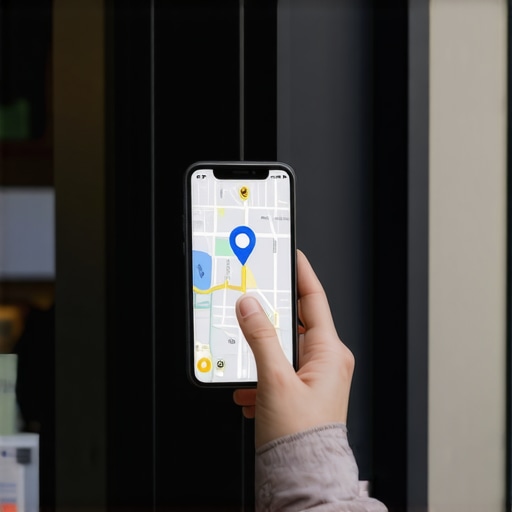
The concrete outside was still wet from a morning rain when the call came in. I stood on a street corner in downtown Chicago, looking at a building that existed on my screen but looked like an empty shell in reality. This was the front line of the proximity war. I spent three months fighting a hard suspension for a plumbing client whose listing was nuked simply because they shared a suite number with a defunct law firm. Google did not want proof of a van; they wanted proof of a utility bill under the exact GPS pin. They wanted to see the grain of the wood on the desk and the specific flickering of the neon sign. Digital existence is cheap. Physical existence is the only currency the algorithm accepts now. The city smells like damp asphalt and exhaust. Every storefront is a data point. When those points don’t align with the satellite imagery, the system purges the listing without mercy.
The ghost in the GPS coordinates
Proving physical existence requires high resolution photos of permanent signage, official utility bills, and video walk-throughs that connect the street address to the internal workspace. Google uses these assets to verify that a business is not a lead-generation shell or a virtual office trap. The system cross-references the metadata of your files against known spatial databases to ensure the location is legitimate and staffed. You can see the glitch in the data when a business tries to hide behind a post office box. I’ve seen hundreds of profiles vanish because they ignored the 7 signals that tell google your local business listings are untrustworthy. The algorithm is looking for the heartbeat of a real operation. It looks for the specific shadows cast by your building at 2 PM. It looks for the tire marks of your service trucks. If your digital footprint is too clean, it looks fake. Real businesses are messy. They have stacks of invoices. They have tools on the floor. To survive, you must document the mess. Capturing a raw, unedited video of your team working is worth more than a thousand stock photos. The street photographer knows this. The candid shot reveals the truth that the staged render hides.
Why your physical address is a liability
Virtual offices and shared workspaces often trigger immediate suspensions because they lack unique entrances and dedicated signage. Google Business Profile guidelines explicitly forbid the use of mail receiving services as business addresses. If your suite number is shared by twenty other LLCs, the proximity filter will likely flag your profile as a duplicate or a spam risk. This is the core of recovering from a google penalty a local business case study where the primary issue was address sharing. You must differentiate your space. This means having a permanent sign that is not a piece of paper taped to a door. It means having a lease that specifies your exclusive use of the square footage. The algorithm is cold. It does not care about your startup’s lean overhead. It cares about the centroid. If your address is a