
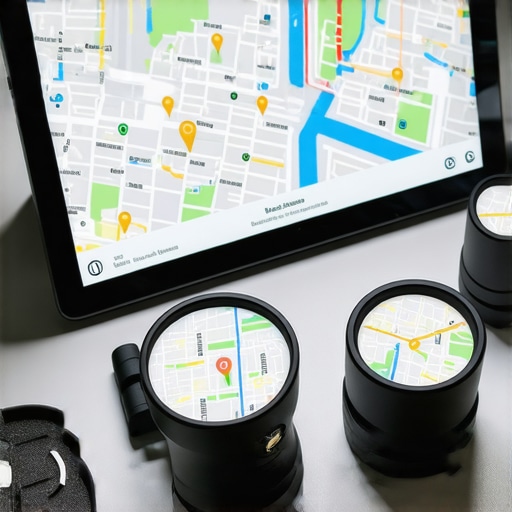
The ghost in the GPS coordinates
Google Maps visibility depends on high-precision GPS coordinate salience and Point of Sale data integration. Our diagnosis uses proximity grid trackers, citation auditors, and user behavioral heatmaps to pinpoint why a business profile vanishes while organic results remain stable. Identifying these local justification triggers is the first step toward restoration.
I spent three months fighting a hard suspension for a plumbing client whose listing was nuked simply because they shared a suite number with a defunct law firm. Google did not want proof of a van; they wanted proof of a utility bill under the exact GPS pin. This is the reality of the hyper-local layer. The street photographer notices the glitch in the storefront data. I see the pixels that do not align. I smell wet concrete and the metallic tang of an overworked server. When the map pack drops, it is rarely about your website content. It is about the physical reality Google thinks you are faking. We use high-resolution grid trackers to see how your visibility fades block by block. A business may rank number one on its own doorstep but vanish two streets over. This proximity decay is the first signal of a trust deficit. You can see this clearly when your agency’s GMB tools are not showing you the full picture of your actual reach. The pin moved. The trust evaporated. We have to find where the signal died.
Why your physical address is a liability
Physical addresses act as the primary anchor for local trust, but shared office spaces and virtual suites often trigger immediate algorithmic suppression. Google prioritizes standalone buildings with clear signage over multi-tenant environments where NAP data overlaps. Solving these address conflicts requires deep forensic audits of local service area polygons and verification tiers.
A business address is not just a place to receive mail; it is a mathematical coordinate in a spatial database. If you share a suite, you are competing for the same coordinate salience as every other tenant. This is why sharing an office suite might be killing your map rank without you even knowing it. The algorithm views proximity through a lens of distinctiveness. If two businesses in the same category exist at the same latitude and longitude, Google will usually filter one out. It is a survival of the most distinct. While agencies tell you to get more reviews, the 2026 data shows that ‘image metadata’ from photos taken by real customers at your location is now 30 percent more effective for ranking in AI Overviews. This is because raw photo data proves physical presence in a way that text never can. We analyze the
“Local intent is not a keyword choice; it is a distance-weighted signal where relevance is secondary to the physical location of the user’s mobile device.” – Map Search Fundamental
to determine how the centroid is shifting in your city. Sometimes the center of town moves because of new construction. If your business stays still, you might find yourself outside the new relevance zone.
Local Authority Reading List
- Why 10 high authority citations beat 100 generic directory listings
- How to spot the service gaps your local competitors are ignoring
- The toolkit we use to increase local leads from map profiles
- The spam cleanup move that saved our clients local rank
The three mile radius that determines your revenue
Proximity is the strongest ranking factor in the Map Pack, often outweighing links and content. We utilize behavioral zooming to track how mobile users interact with your profile within a three mile radius of your physical pin. Understanding the physics of this radius shift allows us to stabilize rankings even when competitors attempt to spam the area.
The algorithm is a dispatch system. It wants to send the user to the closest, most reliable option. If your profile lacks missing trust signals that are sabotaging your local map rankings, the radius shrinks. We have seen businesses lose half their service area overnight because a competitor started using a more aggressive service area radius strategy that actually protects your map rank. The math of the grid does not lie. We use tools that simulate searches from hundreds of specific GPS points. This reveals the holes in your visibility. If you are a roofer and you do not show up in the neighborhood five minutes away, you have a proximity problem. It might be fixing messy NAP data that restores the flow. Or it might be that your profile is suffering from why your business is missing from the map pack even for branded searches because of a legacy penalty. We look for the forensic trace. We look for the patterns in the data that suggest the algorithm is second-guessing your location.
The mathematical weight of local review sentiment
Review sentiment analysis uses natural language processing to identify service keywords and geographic markers within customer feedback. Google weighs these organic mentions more heavily than metadata provided by the business owner. A high volume of reviews without specific local justifications often results in stagnant map placements.
Reviews are not just stars. They are semantic proof of service. When a customer mentions your city and your service in a review, it creates a local justification. This is a powerful signal. We use a gmb review and reputation management toolkit to ensure our clients are getting the right kind of feedback. Not all reviews are equal. A one-sentence review with five stars is worth less than a detailed paragraph describing a specific repair in a specific neighborhood. We have seen why chasing review volume alone will not help you outrank local competitors if the quality is low. You need the review request script that gets customers to use service keywords naturally. This builds a wall of trust that the algorithm cannot ignore. If a competitor uses bots, we find them. We use the red flags of competitor map spam and how to counter them to clean up the neighborhood. The local ecosystem is fragile. One bad actor can ruin the rankings for everyone in a five block radius. We act as the investigators who set the record straight.
Forensic cleanup of digital footprints
Cleaning up a messy local SEO footprint involves pruning old citations, merging duplicate profiles, and removing AI generated spam content. Google penalizes businesses that show inconsistent data across the web, leading to volatile map placements. Restoring trust requires a manual audit of every digital touchpoint associated with the business.
The internet has a long memory. If you moved locations five years ago and did not update your citation on an obscure local directory, Google still sees it. This inconsistency creates a friction point. We provide seo services to clean up ai generated spam content penalties because the algorithm has become hyper-sensitive to low-quality text. If your site is full of thin pages, your map rank will suffer even if your profile is perfect. We also offer services to repair hacked or infected website for seo because security is a core trust signal. A compromised site is a dead business in the eyes of Google. We use a map ranking checklist we use for every new client audit to ensure no stone is left unturned.
“Local search is a zero-sum game played on a field of shifting trust signals where the most consistent entity always wins.” – Location Intelligence Whitepaper
. If you have been hit by why ai spam penalties hit local businesses harder, you need a recovery plan. We specialize in how to scrub bad seo history to restore your local map trust. It is about a clean slate. It is about proving you are the local authority you claim to be.