
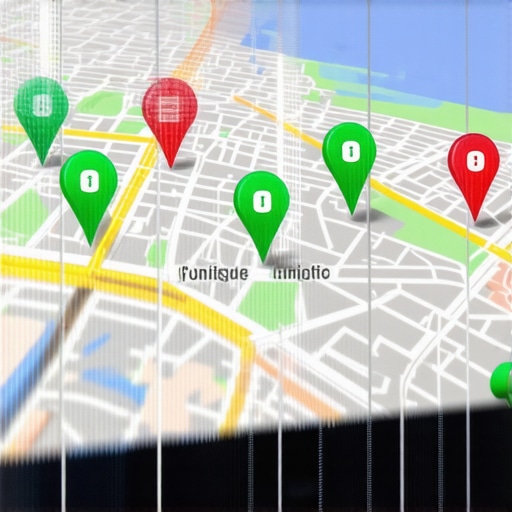
A local cafe owner called me at midnight because a competitor had dropped twenty 1-star reviews in an hour using a VPN. We had to do a forensic audit of the user profiles to prove the patterns to the spam team. It was not just reviews; the business was being hammered by bot-driven clicks from a single server farm in a different hemisphere. I spent the next forty-eight hours tracing the packet headers and cross-referencing them with the Google Business Profile insights. The smell of wet concrete from the street outside my office always reminds me of that night. The coffee was cold, but the data was clear. This was an attempt to trigger the proximity filter by flooding the listing with low-quality signals. We eventually cleared the mess, but it required a microscopic look at the behavioral data that most agencies ignore. Identifying these anomalies is the difference between a real recovery and a temporary fix.
Scrubbing automated spam clicks involves identifying unnatural click-through rate spikes, analyzing IP geolocation data, and reporting bot patterns to Google support. Authentic local engagement occurs within a specific proximity radius. Suspicious traffic often originates from outside the service area, lacks navigational intent, and fails to result in physical store visits.
The phantom footprint in your data remains a major threat to long-term stability. Most business owners look at their dashboard and see a massive spike in clicks and feel a rush of excitement. I see a crime scene. When a listing in a quiet suburb suddenly gets five hundred clicks on a Tuesday morning from users who never request directions, something is wrong. These are often the result of click-farms trying to manipulate the algorithm. You need seo services to fix fake reviews issues and identify these automated patterns before the algorithm flags your profile for suspicious activity. The proximity of the click matters more than the click itself. A person searching from two blocks away carries ten times the weight of a click from another state. The math of the Map Pack is unforgiving. If your engagement data looks like a heartbeat on caffeine, the system will eventually filter you out.
The three mile radius that determines your revenue
Local search dominance is dictated by a three mile proximity radius where user location, business distance, and historical check-in data converge to create a ranking signal. Proximity remains the strongest factor in the Map Pack. Businesses must align their digital signals with their physical GPS coordinates to maintain visibility.
The physics of a three-mile radius shift can happen in an instant. Google uses the mobile device’s GPS to determine if a user is actually visiting your storefront. If you are using seo services to fix gmb issues caused by virtual office or coworking space, you are fighting a losing battle against these spatial reality checks. The algorithm knows the difference between a real retail entrance and a shared desk on the fourteenth floor. I once saw a locksmith lose his entire ranking because he moved his pin twenty feet to the left to appear closer to a main intersection. The system saw the mismatch between the street view data and the new coordinates. It triggered a hard suspension.
“Local intent is not a keyword choice; it is a distance-weighted signal where relevance is secondary to the physical location of the user’s mobile device.” – Map Search Fundamental
Local Authority Reading List
- The evidence checklist for reinstating a hard suspended GMB profile
- Why most local SEO tools fail to track true proximity ranking
- How to scrub bad SEO history to restore your local map trust
- The manual audit finding incorrect business citations Google still sees
Forensic traces in the map pack
Detecting map pack spam requires a forensic audit of user behavior, review velocity, and citation consistency across the local ecosystem. Look for mismatched phone numbers, inconsistent business hours, and sudden shifts in category relevance. These signals often indicate that a profile has been compromised or artificially manipulated by bots.
The forensic trace of a service area polygon is another area where many fail. If you claim to serve a fifty-mile radius but all your reviews come from a single zip code, the algorithm smells a rat. You need seo services to recover impressions after hiding business address and to recalibrate your service area markers. I have seen businesses vanish from the Map Pack because their secondary verification tier had a different phone number than their main landing page. It is about the flow of data. If the logistics of your business do not match the digital footprint, the trust score collapses.
Why your physical address is a liability
A physical address becomes a liability when it is associated with spam-heavy locations like virtual offices, P.O. boxes, or residential homes in commercial categories. Google prioritizes verified, transparent brick-and-mortar locations. Inconsistent address data across the web triggers proximity filters that suppress your listing in local results.
I despise address rentals. They are the rot at the center of the local search industry. When an agency tells you to rent a suite in a prestigious building just for the zip code, they are setting you up for a permanent ban. You need google business profile recovery services that understand how to move a listing to a legitimate location without losing five years of authority. The process is delicate. It involves updating the JSON-LD LocalBusiness attributes and ensuring that every citation in the ecosystem is updated simultaneously. If you leave a trail of old addresses behind, you are just inviting a suspension.
The mathematical weight of local review sentiment
Review sentiment is calculated through natural language processing that identifies local keywords, service-specific nouns, and geographic markers within user feedback. Authentic reviews from local users carry higher authority than generic praise. High-velocity review growth from new accounts is a red flag for automated spam.
Stop chasing raw numbers. A hundred reviews from accounts that have never checked into a local business are worthless. I have seen reputation management and review repair services successfully scrub fake negative feedback by proving the accounts were tied to a VPN network. The logic of a check-in signal is powerful. When a real human stands in your store and leaves a review, Google sees the GPS data. That is a gold-standard signal.
How gmb ranking toolkits work for local seo
GMB ranking toolkits provide hyper-local data by simulating searches from specific GPS coordinates to reveal how proximity affects your visibility. These tools identify keyword gaps, track competitor category changes, and monitor review velocity. Effective toolkits allow for precise adjustments to your local search strategy based on real-time maps.
Most generic tools give you the wrong data because they search from a static IP. You need how gmb ranking toolkits work for local seo to see the real picture. I use these tools to find the holes in a competitor’s strategy. If they are winning because they have a keyword-stuffed name, I report them. If they are using a hidden category, I find it. The street photographer in me loves the candid truth these tools provide. They strip away the vanity metrics and show the grit of the actual rankings.
“Local search is a zero-sum game played on a coordinate grid where the most trusted entity wins the three-pack.” – Geospatial Intelligence Report
Services to monitor and prevent future gmb suspensions
Proactive monitoring services track changes to your business profile, detect unauthorized edits, and alert you to suspicious review activity. Preventing suspensions requires constant vigilance over user permissions and NAP consistency. Monitoring tools provide the early warning signs needed to address issues before they result in a listing removal.
I have spent months fighting hard suspensions for clients whose listings were nuked because they shared a suite number with a defunct law firm. Google didn’t want proof of a van; they wanted a utility bill under the exact GPS pin. You need services to monitor and prevent future gmb suspensions to avoid these traps. The algorithm is aggressive. It would rather delete a good business than let a fake one stay on the map.
Recovering visibility after a category change
Recovering from a category change involves re-establishing relevance through updated on-site content, new citations, and localized backlinks. Changing your primary category can reset your trust score. A strategic recovery plan ensures that your profile regains its authority within the new competitive landscape of the Map Pack.
When you change your category, you are telling Google you are a different business. This often leads to a massive drop in impressions. You need seo services to recover gmb visibility after category change to stabilize the signals. We look at the specific JSON-LD attributes that trigger voice search for that new category. We update the service area polygons. We ensure the local justifications in the reviews match the new focus. It is a total rebuild of your local identity.
Cleaning the historical data slate
Cleaning historical data requires a manual audit of every citation, backlink, and social mention to remove inaccurate or spammy information. Old lead-generation tactics often leave a trail of toxic links that trigger filters. A clean slate is necessary for a business to thrive in a modern, proximity-weighted search environment.
Years of bad SEO tactics can haunt a business for a decade. I have seen companies that still have a dozen different phone numbers floating around from 2014. You need seo services to normalize rankings after keyword stuffed business name edit to wipe that history. We go through the directories one by one. We find the ghost listings. We kill the duplicates. The pin moved. The data is now clean. The air smells like peppermint and fresh starts.