Why Your Google Maps Views Aren’t Turning into Phone Calls
There is a specific kind of frustration reserved for the small business owner who opens their Google Business Profile (GBP) dashboard to see a sea of green upward-pointing arrows, yet hears nothing but silence from their office phone. Your “Views” are up 40%. Your “Impressions” are at an all-time high. By all accounts, your google business profile seo strategy should be winning. But the leads aren’t coming in. Why?
As a Local SEO Consultant, I often tell my clients that local search is not traditional marketing; it is infrastructure. If your infrastructure is built to attract eyeballs but not to facilitate transactions, you are effectively building a billboard in the middle of a desert. You might have thousands of people seeing you, but if they aren’t the right people, or if you haven’t given them a reason to stop, those views are nothing more than a vanity metric.
In this guide, we are going to bridge the gap between “Visibility” and “Conversion.” We will explore why high-intent users are bypassing your listing, how to align your profile with actual buyer behavior, and how to get more calls from google maps by treating your profile as a high-conversion landing page rather than a static directory listing.
Before we dive deep, it is essential to understand that visibility without relevance is a recipe for failure. If you want to understand the technical nuances of why your ranking might be high but your engagement is low, you should first look into The Signal Gap: Why Your Map Position Improvement Fails in High-Traffic Zones.
I. The View Trap: Why Impressions Are a Vanity Metric
The first thing we must address is the “View Trap.” Google defines a “view” or “impression” quite broadly. If a user searches for “restaurants near me” and your hardware store appears in the peripheral map view because you happen to be next to a popular bistro, that counts as a view. Does that view have any chance of turning into a phone call? Almost certainly not.
Local SEO isn’t just about being seen; it’s about being chosen. Many business owners focus so heavily on google business profile optimization that they forget the human on the other side of the screen. High “off-target” views occur when your profile is optimized for broad terms that don’t match your actual service offering. You might be ranking for “construction” when you only do “residential roof repair.” You get the views from people looking for skyscrapers, but you don’t get the calls from homeowners.
The goal is to shift your focus from “How many people saw me?” to “How many people with an immediate need saw me?” This requires a shift in how you view your data. If your views are high but your “Interactions” (calls, messages, website clicks) are low, your relevance is mismatched with the searcher’s intent.
II. The Relevance Gap: Intent vs. Impressions
One of the most common reasons for a lack of calls is a misalignment between your primary category and the user’s search intent. Google’s algorithm is incredibly sophisticated, but it still relies heavily on the categories you select. If you are using a google maps ranking service to boost your visibility, but your categories are too broad, you are casting a net that is too large to catch the specific fish you want.
Primary vs. Secondary Categories
Your primary category carries the most weight. If you are a Personal Injury Attorney but your primary category is simply “Lawyer,” you are competing for broad, low-intent searches. A user searching for “Lawyer” might be looking for a divorce, a will, or a corporate contract. When they see your personal injury-focused profile, they won’t call. By refining your google business profile seo to prioritize specific, high-intent categories, you ensure that the people viewing your profile are actually looking for what you sell.
The “Near Me” Misconception
Ranking for “near me” queries is the holy grail of local search, but it’s a double-edged sword. If your service area is set too wide, you may appear in searches for users who are 20 miles away. In the mind of the consumer, 20 miles is too far for a plumber or a locksmith. They see your profile, they see the distance, and they move to the next option. This is a classic example of how 5 Service Area Mistakes That Sabotage Your Map Results Ranking can lead to high views but zero conversions.
To fix this, you must align your service pages on your website with the specific geographical areas you serve. Google looks at your website to verify the claims made on your GBP. If your website doesn’t mention the specific neighborhoods you’re ranking in, the “Trust-Signal” is broken, and the user will sense the disconnect.
III. Weak Decision Signals: Why They Click Away
Let’s assume you’ve solved the relevance gap. You are appearing for the right keywords, in the right area, to the right people. Why are they still not calling? The answer lies in “Decision Signals.” When a user looks at the Local Map Pack, they are performing a rapid-fire comparison. They are looking for reasons to eliminate you.
Review Velocity and Sentiment
It is no longer enough to have a 4.5-star rating. In 2024 and beyond, “Review Velocity” – the frequency with which you receive new reviews – is a critical conversion factor. If your last review was from six months ago, the user assumes you are either out of business or have lost your touch. A profile with 50 reviews, five of which were from the last two weeks, will almost always outperform a profile with 500 reviews where the most recent is from 2022.
Furthermore, how you respond to these reviews matters. If you aren’t responding to reviews, you are signaling to potential customers that you are unapproachable. This is a common reason Why Your Map Results Ranking Stalls Despite Great Reviews. Users want to see a business that is active and engaged.
Visual Trust: Proof of Work
Stock photos are the death of conversion. If your profile is filled with generic images of “smiling professionals” or “blueprints,” you aren’t building trust. Users want to see “Proof-of-Work.” They want to see the actual van you drive, the actual team that will show up at their house, and the actual results of your labor. High-quality, original photography is one of the most underrated local seo tools available to you. It provides the visual confirmation that you are a real, local entity capable of solving their problem.
The Unanswered Q&A Section
The “Questions & Answers” section of your GBP is often a graveyard of missed opportunities. Potential customers often ask vital questions here: “Do you offer emergency services?” “Is there parking?” “Do you take insurance?” If these questions go unanswered, or worse, are answered by a random “Local Guide” with incorrect information, you lose the call. Proactive google business profile optimization involves seeding your own Q&A section with the most common questions you hear on the phone.
IV. Technical Barriers to the “Call” Button
Sometimes, the reason you aren’t getting calls is purely technical. Google’s mobile interface is designed for speed, but if your profile isn’t configured correctly, you might be making it difficult for users to actually reach you. This is where a professional google maps ranking service can help identify friction points in the user journey.
NAP Inconsistency and Ghost Numbers
NAP (Name, Address, Phone) consistency is a foundational element of Local SEO. If your phone number on Google Maps differs from the one on your website or your Yelp profile, Google’s confidence in your data drops. More importantly, it confuses the user. If they see two different numbers, they may hesitate to call, fearing they’ll reach a disconnected line or a call center. Ensure your primary number is a local area code whenever possible, as this reinforces your “local” status.
Missing Attributes
Attributes are the small tags that appear on your profile, such as “Identifies as women-owned,” “Wheelchair accessible,” or “Online Appointments.” For many service-based businesses, attributes like “Emergency Services” or “Onsite Services” are triggers for the call button. If a user is in a panic because their basement is flooding, they are looking for the “Emergency Services” tag. If you haven’t checked that box in your dashboard, they will skip you for the competitor who has. Small tweaks like this are covered in The Accuracy Audit: 4 Small Tweaks to Rank Higher on Google Maps Fast.
The Impact of Mobile UX
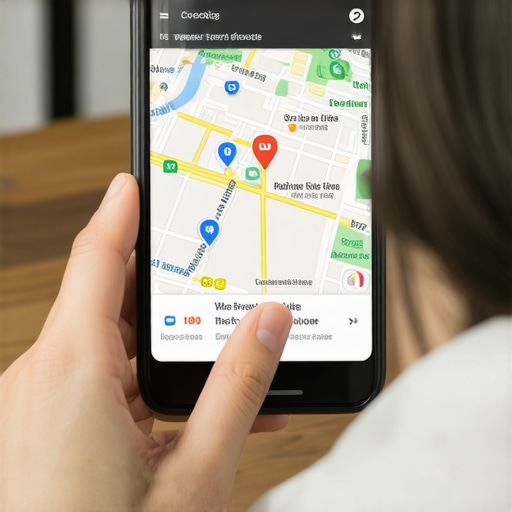
Most Google Maps interactions happen on mobile. If your “Call” button is obscured by a “Get Directions” overlay or if your phone number is incorrectly formatted (preventing the “click-to-call” functionality), your conversion rate will plummet. You must regularly audit your own profile from a mobile device to ensure the user journey is frictionless.
V. The 2026 Shift: AI, Haptics, and Proof-of-Action
As we look toward the future of local search, the landscape is shifting from “Information” to “Action.” By 2026, we expect Google to lean heavily into AI-driven “Trust-Tags” and “Proof-of-Action” signals. This means that simply saying you are a plumber won’t be enough; Google will use data from your connected apps, haptic feedback from user devices, and AI analysis of your photos to verify that you are actually completing jobs in real-time.
Haptic Maps and Immersive View
Google is already rolling out “Immersive View” for maps, which uses AI to fuse billions of images to create a multidimensional model of places. In the near future, “Haptic Maps” will allow users to “feel” the activity level of a business. If your business shows no “Proof-of-Action” (no recent photos, no recent check-ins, no recent reviews), you will appear “cold” in the map interface. To stay ahead, you need to understand How to Rank Local Results on 2026 Haptic Maps Without Ads.
AI Trust-Tags
Google’s SGE (Search Generative Experience) is already summarizing reviews to create “Trust-Tags.” Instead of just showing your star rating, Google might display a tag that says “Highly praised for punctuality” or “Known for fair pricing.” These tags are generated by AI analyzing your review text. If you want google maps seo tools that actually work in this new era, you must focus on generating reviews that mention specific services and attributes, rather than just “Great job!”
This shift represents a move toward “infrastructure-based SEO.” You aren’t just trying to rank; you are trying to build a verifiable digital footprint of your physical activity. This is the cornerstone of Strategic Approaches to Dominating Local Map Results in 2025.
VI. The Conversion Audit: A Step-by-Step Checklist
If you are seeing views but no calls, run through this immediate google business profile audit tool checklist to identify the leak in your funnel:
- Category Audit: Is your primary category the most specific one available for your highest-revenue service?
- Review Recency: Have you received a 5-star review in the last 7 days? If not, your “Velocity” is too low.
- Photo Freshness: Are your top 5 photos real images of your work, or are they stock/exterior building shots?
- Call-to-Action (CTA): Does your “Business Description” end with a clear reason to call right now (e.g., “Call for a free same-day estimate”)?
- Attribute Check: Have you selected every relevant attribute, especially those related to “Emergency” or “Online Booking”?
- Q&A Seeding: Have you answered the top 3 questions customers ask before hiring you?
By systematically addressing these points, you move your profile from a passive “view-collector” to an active lead-generation machine. Remember, google business profile optimization is a marathon, not a sprint. It requires constant refinement based on how users are interacting with your listing.
VII. Conclusion: Stop Hunting Citations, Start Building Trust
In the early days of Local SEO, you could win by simply having more citations than your competitor. Those days are over. Today, Google Maps is a sophisticated ecosystem that rewards relevance, activity, and trust. If your views aren’t turning into phone calls, it is because there is a “Trust Gap” or a “Relevance Gap” in your profile.
Stop chasing vanity metrics. A thousand views from people who don’t need your service are worth less than ten views from people who are ready to hire. Focus on “Proof-of-Action” signals, maintain a high review velocity, and ensure your technical infrastructure is flawless. When you align your profile with the way humans actually make decisions, the phone calls will follow.
If you’re ready to take your visibility to the next level and ensure your rankings actually result in revenue, it’s time to look beyond the basics and master the evolving landscape of local search.