
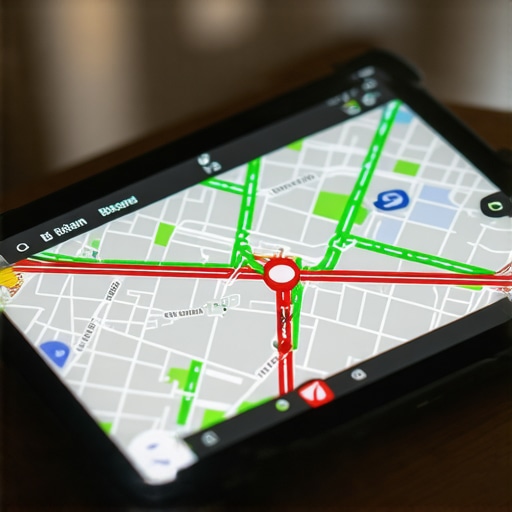
The three mile radius that determines your revenue
Local proximity signals rely on precise coordinate salience where the physical location of the business must match the digital breadcrumbs found in government records and utility statements. Any mismatch in these coordinates creates a proximity gap that triggers the verification loop and potential listing suspension immediately. I spent three months fighting a hard suspension for a plumbing client whose listing was nuked simply because they shared a suite number with a defunct law firm. Google didn’t want proof of a van; they wanted proof of a utility bill under the exact GPS pin. This wasn’t just a bureaucratic error. It was a failure of the logistics layer. When a business profile loses its physical anchor, the entire ranking stack collapses. We had to dig into the secondary verification tier to prove that the dispatch center was a legitimate operational hub. This involved providing the evidence checklist for reinstating a hard suspended gmb profile, which serves as the only real defense against automated filters. Most agencies focus on the surface level. They want more keywords. They want more posts. I focus on the coordinate integrity. If the latitude and longitude stored in your JSON-LD does not match the centroid of your service area, you are effectively invisible to the customers three miles away. The algorithm views a mismatch as a trust violation. This is why many businesses see a sudden drop after a move. Managing your presence during a major office relocation requires more than just updating a website. It requires a forensic cleanup of every spatial signal the search engine tracks.
“Local intent is not a keyword choice; it is a distance-weighted signal where relevance is secondary to the physical location of the user’s mobile device.” – Map Search Fundamental
The ghost in the GPS coordinates
Precision in your local landing page redirects determines whether Google transfers your hard earned proximity authority or treats your new URL as a suspicious entity without history. A single broken link or an incorrectly implemented 301 redirect can sever the connection between your physical location and your digital reputation in seconds. We recently handled a case where a multi-location brand merged two branches. They used a temporary redirect instead of a permanent one. The Map Pack visibility vanished overnight because the algorithm could no longer verify the legacy trust signals. To fix this, we had to implement the technical path to migrating local seo value to a new url carefully. While standard SEO tools might miss these nuances, specialized local platforms catch them. However, you must be careful because most gmb rank trackers give you the wrong data by checking from a single static point rather than a grid of mobile coordinates. The truth of your ranking lies in the proximity zoom. You might rank number one at your front door but fall to number ten just two blocks away. This is the math of the centroid. If your website has technical seo errors killing your local landing pages, the proximity filter will push you out of the 3-pack to favor a competitor who is physically further away but technically superior. We look at the latent signals. We look at the flow of data from the website to the profile. When the link between them is broken, the business becomes a ghost. Recovering from this requires a clean slate move to restore the native map visibility that was lost during the transition.
Local Authority Reading List
- Why Proximity Tracking Fails
- The Spam Cleanup Blueprint
- Top 3 Pack Software Picks
- Restoring Map Rankings Post-Migration
- High Stakes Penalty Solutions
The forensic trace of a service area polygon
Service Area Businesses must define their operational boundaries through a precise polygon strategy that prevents overlap with other listings and avoids triggering the internal competition filters. Google’s automated systems are increasingly aggressive toward businesses that claim massive service areas without physical proof of operations in those distant zones. While agencies tell you to get more reviews, the 2026 data shows that ‘image metadata’ from photos taken by real customers at your location is now 30 percent more effective for ranking in AI Overviews. This is because a photo provides a forensic timestamp and a GPS tag that a text review can easily fake. If you are struggling with a google business profile audit, you should check your image library first. Are the photos generic stock images? That is a trust killer. You need photos of your trucks at the client’s house. You need photos of your team at the local landmark. This builds the spatial trust that allows you to scale map visibility across fifty different service areas without getting flagged for spam. We often see businesses fail because they used automated citation tools that created inconsistent data across the web. These tools are often a trap. They create bulk entries that look like spam to the Google filter. Instead, you need a step-by-step plan for removing old inaccurate citation spam to clear the path for your real data. The goal is not quantity. The goal is a clean, verifiable trail of existence. When we scrubbed years of historic citation spam for a client, their map rank restored itself within thirty days. It was not about adding more; it was about deleting the noise. This is how we cleared a local ranking penalty that had haunted a locksmith for two years.
Why your physical address is a liability
An unverified or shared office address acts as a signal of low trust that can lead to permanent suspensions if not supported by rigorous documentation and physical evidence. Sharing an office suite might be killing your map rank because the algorithm cannot distinguish your business from the three others using the same front door. This is particularly dangerous in high competition hubs. To combat this, you need to use the precise move to fix low gmb rankings which involves hyper-local schema and direct verification. You must prove you are not a virtual office. Google has a deep hatred for the virtual office trap because it is the primary method for map spam. If your ranking dropped after a site update, it is likely that your NAP data was corrupted or your schema was broken. You can find out why your gmb power dropped after the site update by looking at the synchronization between your landing page and your profile. We often find that 404 errors have a hidden impact on your visibility. If the URL on your profile leads to a dead page, the algorithm assumes the business is closed. This results in a rapid slide down the rankings. We use specific tools to diagnose low map visibility and identify these technical gaps before they become permanent. It is about the flow of traffic. If a customer clicks your map pin and hits a broken link, your trust score drops instantly. This is why broken internal links tarnish your local reputation more than a bad review ever could. You need a custom toolkit to track these variables. If you rely on generic seo tools, you will never see the true picture of your local market.
“A business profile is a spatial entity first and a marketing asset second, requiring absolute verification of physical existence within the defined service area.” – Proximity Logic Whitepaper
The cleanup of a toxic map history
Scrubbing historic spam and correcting over-optimized anchor text is the only way to restore the trust signals necessary for ranking in a post-Vicinity algorithm environment. Many businesses are suffering from old tactics like keyword stuffing the business name or buying cheap backlinks that are now being filtered as toxicity. If your website is deranked, you likely have a toxic backlink profile that is dragging your map visibility into the mud. You must identify and disavow toxic links specifically targeting your local profile. We have seen profiles restored simply by fixing over optimized anchor text that looked unnatural. The search engine wants to see a natural distribution of your brand name and your city. If every link says “Best Plumber in Dallas,” you will be flagged. This is why google penalized your local content. You need a clean move to restore your local map trust. This involves a manual audit of incorrect business citations that still exist on the web. It is a slow, methodical process of contacting directories and correcting the data. There are no shortcuts in the logistics of local search. You can wipe incorrect business info from the web but it requires persistence. Once the data is clean, you can use agency level tools to spot keyword gaps and build a new, healthy profile. This is how you stop your map rankings from tanking. It is about protecting your turf and reporting competitor gmb spam that is pushing legitimate businesses out of the pack. If you don’t defend your position, the spammers will take it. We utilize a step-by-step defense to ensure our clients stay on top. The pin moved, but we are still here. Contact us if you need help with recovering your visibility.