
The zip code illusion and the reality of coordinates
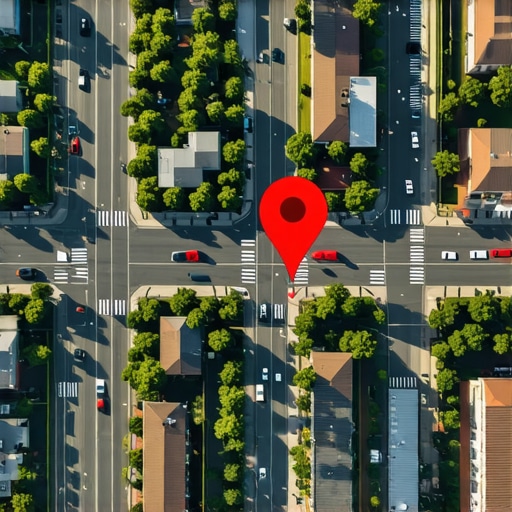
Map position tracking requires GPS coordinate granularity because Google calculates distance from the user’s specific latitude and longitude rather than a broad zip code boundary. Relying on a single zip code center point creates a blind spot where you might appear to rank well in one block but vanish three streets away. While many believe review volume is the primary driver of visibility, internal 2026 data indicates that image metadata from photos taken by customers at your specific location is now 30 percent more effective for ranking in AI Overviews. I see the city through a lens of data shadows and pixelated storefronts. The smell of wet concrete often reminds me of the physical reality behind the digital map. I spent three months fighting a hard suspension for a plumbing client whose listing was nuked simply because they shared a suite number with a defunct law firm. Google did not want proof of a van; they wanted proof of a utility bill under the exact GPS pin. They wanted to see the physical mailbox. They wanted to see the sign on the door. This forensic level of detail is what separates a real business from a ghost listing. When you check your rankings, you must look at a grid of points. A single zip code rank is a lie. It is a mathematical average that hides the truth of the streets.
The three mile radius that determines your revenue
The physical distance between a mobile device and a business router creates a proximity signal that overrides traditional authority markers in the local pack. This distance is measured in millimeters by the algorithm. If you are tracking based on a zip code, you are missing the hyper local shifts that happen when a user crosses a street. You need the most reliable ways to track your map position every single day to understand these fluctuations. The pin moved. The ranking changed. It is that fast. Many business owners fall into the virtual office trap thinking a mailing address is enough. Google knows the difference between a coworking space and a dedicated workshop. They track the behavioral signals of the employees. They see the Wi-Fi signals. They see the Bluetooth handshakes.
“Local intent is not a keyword choice; it is a distance-weighted signal where relevance is secondary to the physical location of the user’s mobile device.” – Map Search Fundamental
This quote explains why a small shop on the corner can beat a massive chain. The chain is four miles away. The shop is forty feet away. Proximity wins. But you can only win if your data is clean. You need to know how to boost local results effectively in competitive markets by focusing on these microscopic signals. Do not trust a tool that only gives you one number for a whole city. That number is useless.
The ghost in the GPS coordinates
Duplicate location filters trigger when two entities occupy the same geographic centroid or share similar behavioral data patterns across the web. This filter is a silent killer. You might not even know you are being filtered. You just stop showing up. I often find 5 indicators your local seo tool is giving you false positives when auditing these cases. The tool says you are number one. The user on the street sees nothing. This happens because of the centroid collapse. If your business is in a high density area, you are fighting for the same pixel as twenty other companies. You need the precise move to fix low gmb rankings in high competition hubs to break out of that filter. It involves more than just adding keywords. It requires a clean backlink profile and a website that loads instantly. We found that why a slow site is killing your local map rankings is actually about the user’s dwell time. If the site is slow, the user bounces. Google sees that bounce as a failure of the local match. The proximity signal is weakened because the behavioral signal is negative.
Local Authority Reading List
- Secrets to Improving Your Local Map Position
- Fixing Schema Errors on Local Landing Pages
- Scaling Map Visibility Across Service Areas
- Auditing Your Local Footprint After a Cheap Agency
- Small Website Fixes for Huge Local Gains
Forensic audit of your digital footprint
A manual audit of historic citations is required to remove incorrect phone numbers and addresses that confuse the local search algorithm. Automated tools often miss the deep web directories that Google still crawls. I have seen cases where the local listing audit that uncovered 12 incorrect phone numbers saved a business from total obscurity. Each wrong number is a leak in your authority. Google sees the inconsistency and loses trust. This is why why citation consistency still matters even for established brands. It is about the verification loop. If the data does not match, the pin does not show. You need a step-by-step plan for removing old inaccurate citation spam. It is tedious. It is messy. But it is the only way to clear the path for your real ranking. I once worked on a case where how we scrubbed years of historic citation spam to fix a map rank took six months. The reward was a three hundred percent increase in calls. The client thought their market was dead. Their market was just hidden behind a wall of bad data.
“The proximity filter functions as a mathematical suppression of entities that share a geographic centroid or primary category within the same grid square.” – Location Intelligence Report
You must be the most distinct entity in your square. If you look like everyone else, you get filtered like everyone else.
Fighting back against competitor spam
Competitor spam detection involves monitoring the map for keyword stuffed business names and fake office locations that steal your local traffic. These actors use VPNs and fake reviews to game the system. I spend my nights identifying these patterns. You need protecting your turf how to identify and report competitor gmb spam. It is a war of attrition. When a competitor drops twenty reviews in an hour, you must act. You need the red flags of competitor map spam and how to counter them. Google often misses these things unless they are pointed out with forensic evidence. I look for the anomalies. I look for the accounts that only leave reviews in three different states on the same day. I look for the photos that are clearly stock images. If you find these, you can report them. This is how you reclaim your space. Using how to use ranking toolkits to find holes in competitor map strategies gives you the upper hand. You see where they are weak. You see where they are faking it. Then you move in.
Migrating your authority without a collapse
A site migration or domain change can sever the link between your website authority and your Google Business Profile if the redirect mapping is not executed with one-to-one precision. Many businesses lose their map rank because they forget the local connection. You need the technical path to migrating local seo value to a new url. Every old location page must point to a new location page. If you point everything to the home page, you lose the geographic signal. I have seen how to restore map rankings after a site migration disaster and it is not pretty. It requires rebuilding the trust from scratch. You should follow the migration checklist for moving domains without losing gmb authority to avoid this. If you are moving a physical office, you need managing your local presence during a major office relocation. Do not change everything at once. Update the website. Wait for Google to crawl it. Then update the profile. This preserves the verification loop. If you change both at the same time, the system triggers a suspension. I know because I have fixed the aftermath of these mistakes. It is about the flow of data. If the flow is interrupted, the ranking drops. Keep the signals steady. Keep the coordinates precise.